
Bathroom Remodels Are Small – But Complex
Bathrooms are the smallest rooms in most homes — but they are among the most technically demanding spaces to remodel.
A full gut-to-studs bathroom renovation typically requires nearly the same number of trades as a kitchen remodel:
Demolition crews
Plumbers
Electricians
HVAC technicians
Framers (if adjustments are needed)
Tile installers
Drywall specialists
Finish carpenters
Painters
The footprint may be only 50 square feet. The coordination complexity is not small.
Unlike cosmetic refreshes, a true renovation exposes plumbing stacks, venting, electrical circuits, waterproofing systems, and structural framing. Once walls are open, surprises are common — outdated wiring, undersized venting, hidden moisture damage, improper waterproofing from prior remodels.
This is where cost overruns begin.
Planning Matters More Than Square Footage
One of the most common misconceptions in bathroom remodeling is that “small room” equals “small project.”
In reality:
- Plumbing is concentrated and technical
- Waterproofing must be flawless
- Tile installation is labor-intensive
- Fixture lead times can delay schedules
- Trade sequencing must be tightly managed
A delayed shower valve delivery can stall tile installation.
A late vanity arrival can push plumbing trim-out.
Permit inspections can interrupt scheduling windows.
Bathrooms require precision sequencing. When one trade is delayed, the entire project timeline shifts.
That’s why remodel planning is not optional — it is cost control.
What an Average Remodel Actually Looks Like (Providence, RI Example)
To illustrate how costs are distributed in a real-world project, here is the contractor-level breakdown for an Average Quality 50 sq. ft. bathroom remodel in Providence, RI.
Total Project Cost (Average): ~$24,413
(Low range: $22,581 | High range: $26,242)
- Labor Total: $10,365
- Materials Total: $14,047
That material-heavy weighting aligns with our stacked labor vs. materials chart.
But where does the money actually go?
Plumbing: $9,535
The single largest line item. This includes fixture rough-ins, drain adjustments, supply lines, and installation of new components.
Bathrooms are plumbing-dense rooms — even minor layout shifts can escalate cost quickly.
Wall Coverings: $4,954
Tile materials and labor drive this category. Shower surrounds are labor-intensive and highly sensitive to craftsmanship quality.
Floor Covering: $1,899
Waterproofing membranes, underlayment, and tile installation add cost beyond simple material pricing.
Project Preparation: $2,245
Site protection, setup, staging, and debris management are real costs — often underestimated in homeowner budgeting.
Demolition: $985
Removal is rarely the expensive part — it’s what’s discovered behind the walls that impacts budgets.
Electrical: $851
Even a modest bathroom requires GFCI outlets, lighting upgrades, and code-compliant wiring.
This breakdown demonstrates something critical:
The majority of cost is not “luxury upgrades.”
It is infrastructure.
Why Materials Dominate Premium Remodels
As quality tiers increase, materials begin to outpace labor as the dominant cost driver.
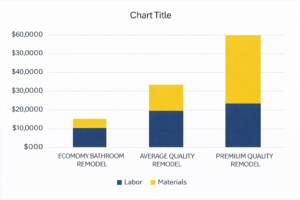
In economy remodels, labor represents roughly 59% of total cost. In average remodels, materials rise to approximately 57%. In premium remodels, materials account for nearly 68% of total cost.
Why?
- Imported tile
- Stone countertops
- Dual vanities
- Custom cabinetry
- Designer plumbing fixtures
- High-end lighting systems
- Separate tub and shower configurations
Labor increases — but material upgrades scale faster.
Premium bathrooms are not simply better installed; they are materially more expensive.
Regional Variation Is Real — And Significant
Your metro matters.
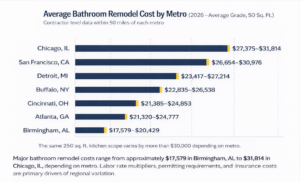
The same 50 sq. ft. average-grade bathroom remodel ranges from:
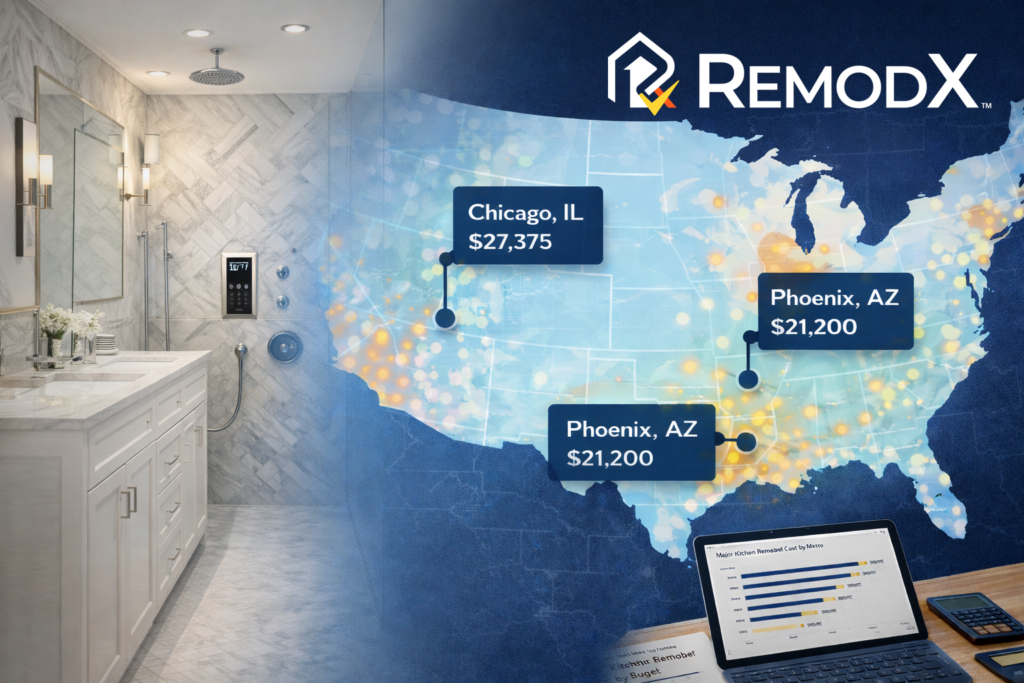
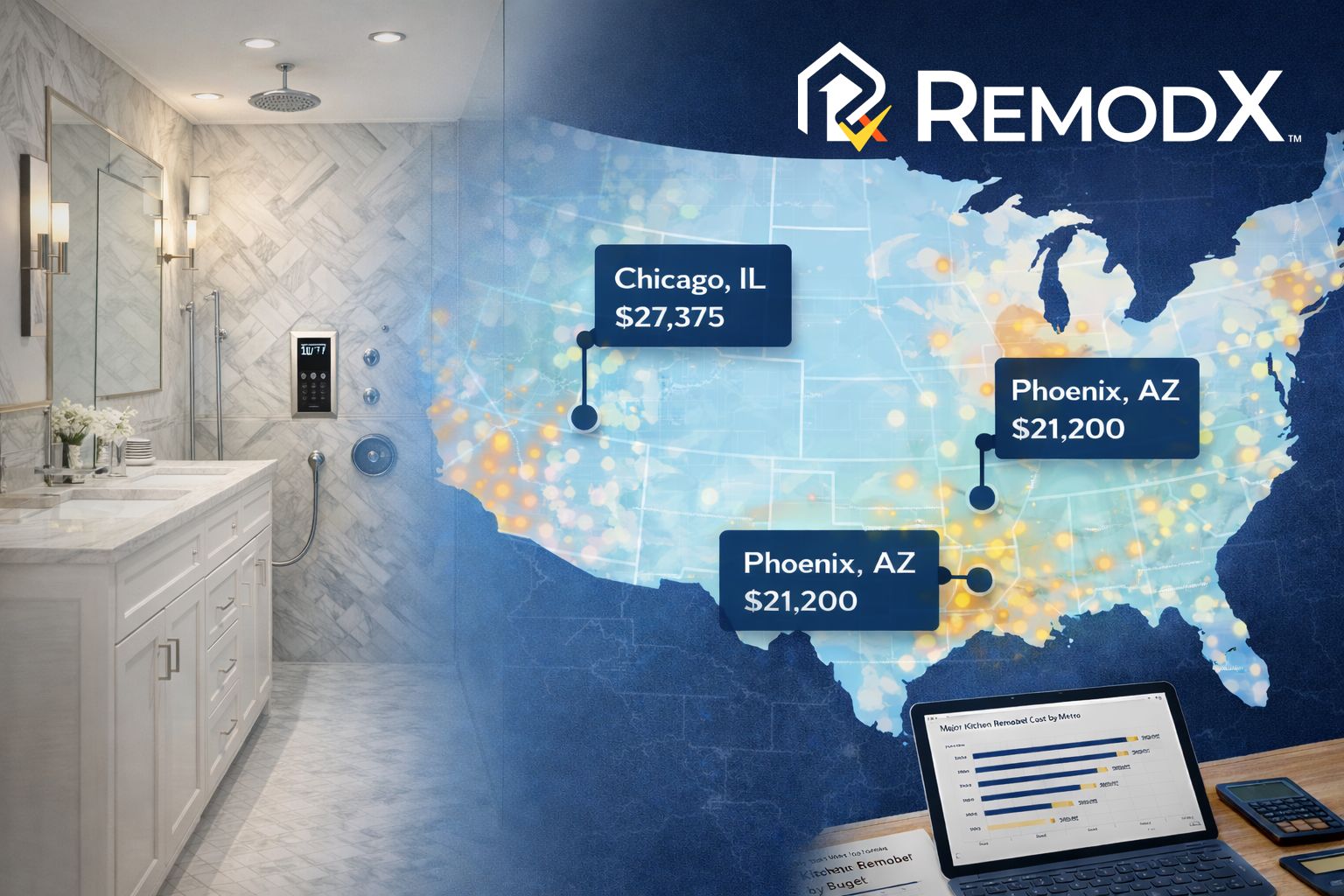
$17,579 – $20,429 in Birmingham, AL
$27,375 – $31,814 in Chicago, IL
That is a spread of more than $10,000 for identical scope.
Labor rate multipliers, insurance costs, permitting complexity, and regional material pricing drive this difference.
This is why national blended averages can mislead homeowners.
Location is a primary cost variable.
Why Cost Overruns Happen
Even well-budgeted projects can drift if planning is incomplete.
Common causes include:
Changing fixture selections mid-project
Discovering outdated plumbing or wiring
Adjusting layout after demolition
Underestimating tile quantities
Scheduling delays between trades
Backordered materials
Bathrooms are sequencing-sensitive projects.
If demolition uncovers a plumbing stack that needs replacement, both cost and timeline shift.
If the waterproofing inspection fails, tile installation must pause.
A small space does not mean low risk.
The Real Role of a Bathroom Remodel Cost Calculator
An accurate bathroom remodel cost calculator should do three things:
- Define scope clearly
- Standardize square footage
- Account for regional labor economics
Without those controls, a “calculator” becomes a marketing estimate.
The RemodX data controls for footprint, scope, and finish level — allowing you to compare apples-to-apples across cities and quality tiers.
That structure is what turns cost estimates into planning tools.
Bathrooms Require Kitchen-Level Planning Discipline
In many ways, a bathroom remodel requires as much coordination as a full kitchen renovation.
Both projects require:
- Plumbing relocation
- Electrical upgrades
- Cabinet installation
- Finish carpentry
- Surface installation
- Inspection compliance
The difference is scale – not complexity.
When homeowners underestimate bathroom remodel planning, they expose themselves to avoidable cost drift.
The Bottom Line
A 50 square foot bathroom may look simple. Behind the walls, it is not.
Infrastructure, sequencing, and material selection drive cost far more than size alone. Regional labor economics can shift identical projects by five figures. And premium finishes escalate materials faster than labor.
If you approach a bathroom remodel with the same rigor as a kitchen project — defined scope, controlled selections, and disciplined sequencing — you dramatically reduce the risk of overruns.
______________________
Final Bathroom Remodel Outlook for 2026
These numbers provide a real-world cost foundation across 30 U.S. metros. Your final bathroom remodel budget will depend on scope definition, material tier selection, and local labor conditions. However, the 2026 bathroom remodel cost landscape reflects various uncertainties:
- Unresolved global or US tariffs
- Continued material volatility
- Regional labor divergence
- Expanding gap between Average and Premium tiers
The difference between Economy and Premium is no longer incremental – it is structural.
Your final bathroom remodel cost will depend on:
- Scope definition
- Material tier selection
- Metro labor conditions
- Permitting and compliance requirements
Understanding those variables before hiring a contractor is the single most powerful financial advantage a homeowner can have.