
Takeaways
-
The “Price War” Reality: Modern sales training encourages contractors to inflate bids by $10k–$15k using high-pressure psychological tactics and “glossy” but vague proposals.
-
Pre-Bid Defense: Establish a “Local Price Baseline” using real-world data (50,000+ jobs) before meeting contractors to identify price padding immediately.
-
Required Transparency: Never accept a “Lump Sum” bid. Demand line-by-line breakdowns for labor, materials, and Overhead & Profit (O&P).
-
The Counter-Offensive: Shift control by providing contractors with a Bid Spec Pack (fixed work plan) so you are comparing “apples to apples” rather than competing sales pitches.
Remodeling Contractors use slick playbooks to raise bids by $10k–$15k. This is your counter-offensive to take back control and save thousands.
Your kitchen remodel or bathroom renovation has likely placed you squarely on the front lines of a price war (like it or not).
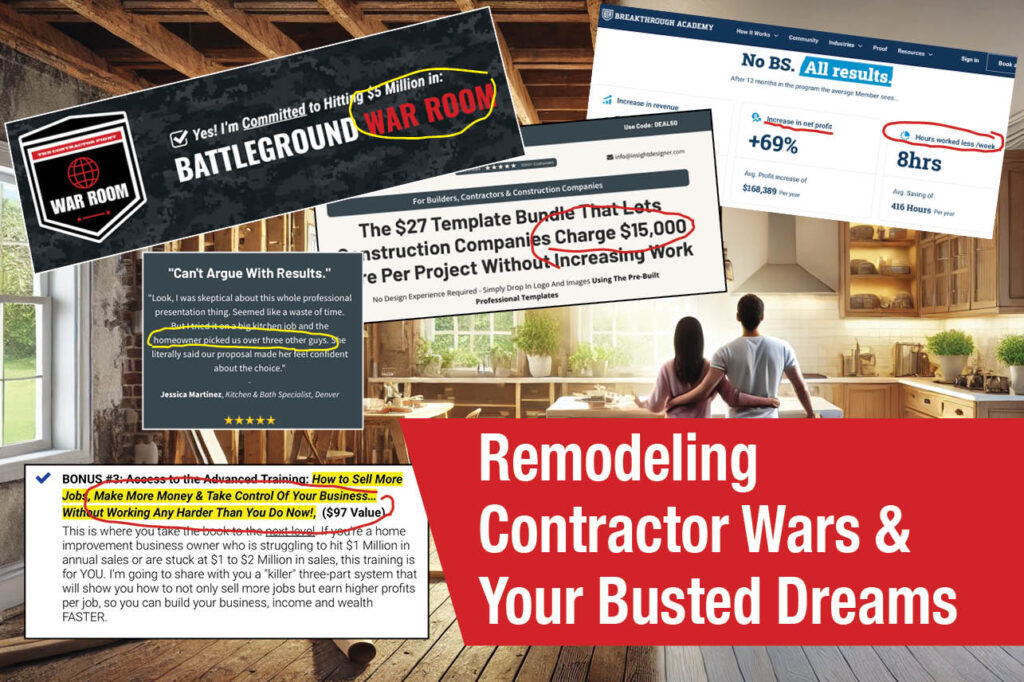
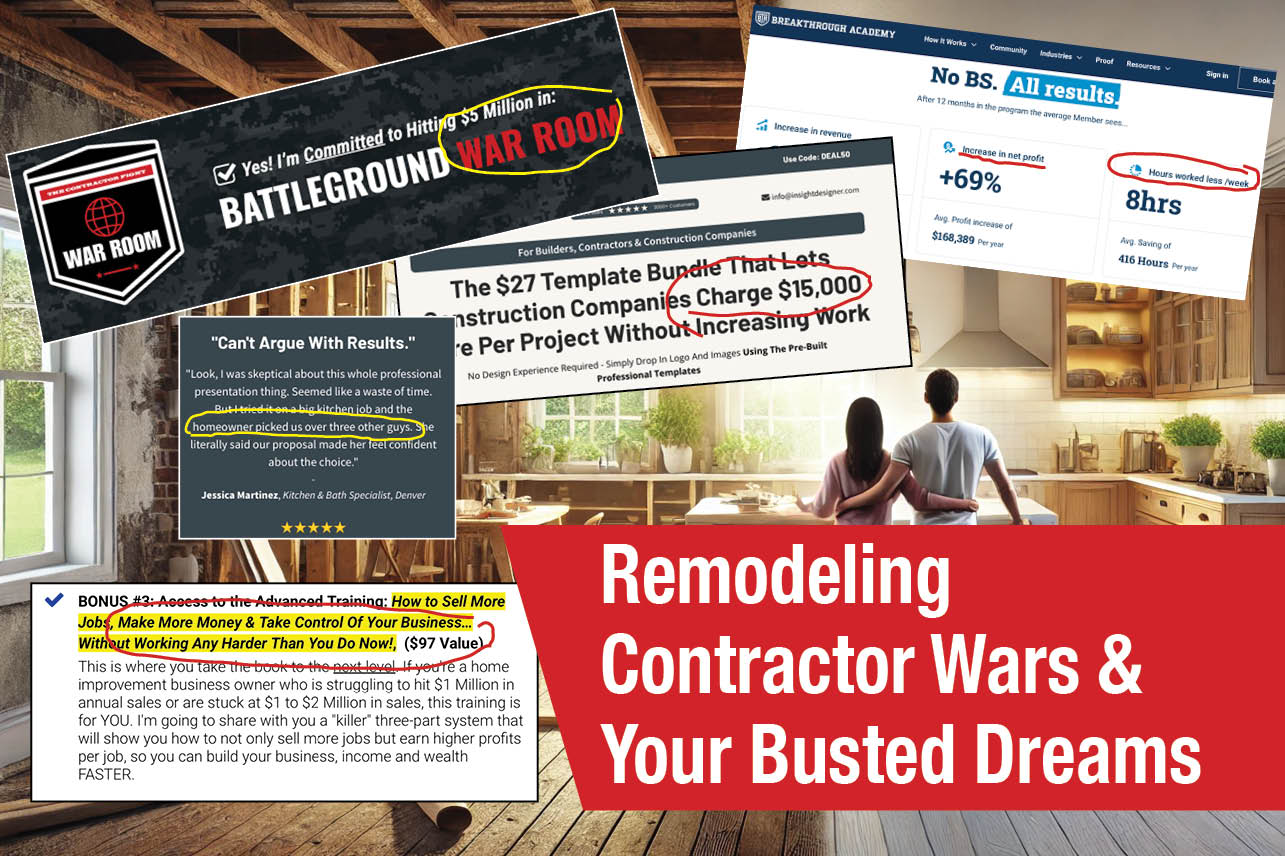
A growing number of home improvement contractors are quietly training with low-cost sales kits – learning how to control the conversation on your home remodel, make their high price feel “normal,” and get you to agree to pay $10,000–$15,000 more — without using better materials or performing extra work. Their glossy proposals, canned sales scripts, and the “trust me, we’ve been doing this a long time” speech – well, these are tools designed to push you toward a bigger number.
Why did 78% of remodels in 2024 go over budget by more than $5,000, and 34% by over $10,000
It’s not a coincidence.
I’m Rebo Knox. I’ve spent 40 years designing and building remodels while protecting homeowners’ budgets. I respect good remodel contractors – I’ve been there, and I know first hand that construction is hard work; they earn their money. But you don’t have to get caught in price-war games.
Here’s how to save money on your remodel:
Decide your project before you call anyone. Use real local material and labor ranges (from 50,000+ jobs like yours) so you know what’s fair before you see your first bid. Give each bidding contractor your planning specification (Bid Spec Pack) and allow one walkthrough before they prepare a proposal.
Then require line-by-line detail showing quantities, product allowances, and labor. Negotiate firmly and ethically. Don’t accept proposals with only five or six vague line items. Some look like this:
- Demo existing kitchen: $1,375
- Rough-in new electrical, plumbing: $4,700
- Install drywall, finish electrical and plumbing: $3,250
- Cabinets and installation: $13,580
- Floor and wall tile: $5,800
- Final cleanup: $1,500
- TOTAL: $30,205 ($15,102.50 down)
Proposals this vague can hide overcharges and padding.
It’s your remodel. Contractors should play by your rules. Let’s keep that extra $10k–$15k in your pocket.
Our Homeowners’ Playbook will:
- Expose the tools and sales tactics some contractors are using to lift prices — without doing more work.
- Give you commonsense counter-moves you can start using today to neutralize their strategies.
- Provide tools to help you get real budget / cost baselines for kitchen and bath remodels so you know if a quote is fair in your area.
- Walk you through a clean, ethical bidding process that keeps you in control of your remodel – from first meeting to final payment.
The Contractors’ Playbooks Behind Their Price Increase Strategy
- Slick proposals & presentation. “Capability statements,” welcome packets, slick portfolios, and polished proposals can make a company look like the safest choice even if the actual work plan is vague. A shiny deck can distract you from digging into numbers and quality.
- Dropping a big number early. Sales training often encourages presenting a large estimate in the first walkthrough. You feel empowered when you “negotiate it down,” even if the final price still sits above a fair range.
- Scripted responses to doubts. Many programs ship “objection handlers” to smooth over your concerns, shift the topic off price, or make you feel inexperienced for asking. You’ll hear, “Trust me, this is how it has to be done,” “We don’t break out line items — only amateurs do,” or “If you focus on price, you’ll get burned by the cheap guy.”
- “Move the focus off price.” Another common tactic: steer you toward “value,” “lifetime benefits,” or fear of mistakes — anything but unit costs, quantities, and clear allowances. The goal is to keep your head nodding while the numbers stay fuzzy.
None of those tactics are illegal. But if you haven’t fortified your pre-bid position (detailed plan, scope, budget and terms), you will be a soft target for these tactics.

Your Counter-Offensive (Confident and Calm)
- They say: “I’ve been doing this for years — this is how it has to be done.”
Your reply: “Thanks. Please show me that step in the work plan and the line-item pricing for it. If there are higher- or lower-priced options, list them so we can choose.” - They say: “We don’t provide line-item breakdowns.”
Your reply: “We only compare line-by-line proposals with quantities, allowances, and your overhead & profit shown. If your format is different, that’s fine — please map your numbers to our project categories.” - They say: “Let’s not fixate on numbers.”
Your reply: “Fair point. Let’s agree on the numbers now so we don’t fixate on them later. Please include quantities, unit costs, allowances by category, and exclusions.” - They say: “I’ll match other bids.”
Your reply: “We don’t share competitor quotes. If you believe we’re missing something, list the added tasks and costs as separate lines so we can see the difference.” - They say: “We can decide the details after we start.”
Your reply: “We decide the details before we start. Please note all selections, allowances, milestone payments, and assumptions in your proposal so we avoid change-order surprises.” - They say: “You’re overthinking this.”
Your reply: “This is a major purchase for my household. Clarity isn’t overthinking — it’s how we make good decisions. Let’s put it in writing.”
Why 78% of Homeowners Overspent on their Remodels (and How You Avoid It)
- The Pinterest → to → Contractor gap. Inspiration is great. Many studies show that most homeowners (like those ’78-percenters’ can’t break the mental concept of jumping from Pinterest Board to contacting a contractor to build those “dreams”. They skip the entire planning stage (layout, finish level, and specific items), enter contractor meetings unprepared, and ultimately hand control to the contractor’s salesperson. The numbers blur; costs climb with each “small” change, and the realization of their mistake comes too late in the process – they finally get their remodel – while licking their financial wounds. Your solution: plan!
- Apples-to-oranges proposals. If each contractor bids a different plan in a different format, you can’t compare fairly. The ‘best-looking’ proposal wins, not the one with the fairest price or terms. Your solution: one standard work plan and one set of categories everyone must price.
- Budget shocks mid-project. Research shows many homeowners hit surprise costs mid-way: nearly 1 in 3 (32%) have stopped a renovation due to unexpected costs, and about 63% took on debt to finish. Fight this by locking details up front, setting realistic allowances, agreeing in writing how any change will be priced — then pad that budget by ~10%.
Quick Definitions (Plain English)
- Work plan (“scope”): a clear list of every task, material, brand/grade, finish, and who does what. “Scope creep” is when the job expands little by little until it’s out of control.
- Allowances: placeholder budgets for items you’ll choose later. Beware low allowances that make a proposal look cheap (e.g., “Dishwasher: $450”) — you pay the difference when you choose a realistic item (e.g., $850).
- Overhead & Profit (O&P): the business markup added to labor and materials. As a reference point, 15% for overhead and 15% for profit is not unusual.
- Change order: a written price and description for work not in the original plan — approved before it happens.
Your Step-by-Step Plan
Step 1 — Nail Down Your Project Before You Shop
Pick layout, finish level, and the big choices (move walls or not; relocate plumbing or not). You don’t need perfect designer drawings; you need a written work plan in homeowner language that covers rooms, tasks, and finishes. We have a free planning template to help shift your mental focus from pastel paint color palettes to remodel management and planning.
Step 2 — Build Your Bid Spec Pack
- Work plan (define the tasks and finishes with detail. NOT “remodel bathroom with walk in shower”, but “demo tub and remove drywall to studs, install Model XYZ shower system, full porcelain tile, paint, etc.”)
- Allowances by category with quantity assumptions – do your homework. (e.g. detail – tile to be [brand] at $4.75 per sq ft material cost, $312 for [brand – model] plumbing fixtures, lighting, appliances)
- Exclusions and clarifications (what’s not included – for instance: “homeowner will purchase the vanity cabinet and sink – contractor to quote only the plumbing hook-up)
- Schedule basics (no demo before permit; work hours; site protection)
- Change-order rules (how price is calculated and approved)
- Selection list (brand/grade or “acceptable equals”. If you have selected very specific light fixtures, plumbing fixtures, etc – and have a source, stick to those specifics with no exchanges)
Step 3 — Set a Local Price Baseline
Use our recommended estimator (up to date, accuracy cost data from 50,000+ real jobs – provided in Rebo’s Toolbox) – or other online estimating tools – to generate a realistic budget range for your city and house condition – before calling a contractor. That’s your yardstick. If a polished proposal lands far above (or below) your baseline without supporting detail, that’s a red flag.
Step 4 — Schedule Only One Short Walkthrough with Each Bidder
Do not accept any “estimate on the spot” from an eager contractor. Plan for 45–60 minutes each. Walk each contractor through the same plan. Stay friendly, but keep it business.
NOW – some contractors will actually make smart recommendations during the walkthrough – like “you should remove this wall for a more open feeling”. Ask them to add a separate cost line to remove the wall, but still bid on your original plan.
Step 5 — Require Line-by-Line Proposals
Every price must map to your categories: quantities, unit costs, allowances, exclusions, schedule, and O&P shown separately. If a contractor refuses to provide comparable numbers, you will be unable to discover if the contractor is padding any figures, or whether they are including all of the items you’ve specified in your plan.
Step 6 — Compare Bids Like a Pro (Without Sharing Other Bids)
Put each proposal into a simple grid. Where one number is high, ask why – and ask for the math – review the line item material and labor cost detail. If an allowance looks unrealistically low (e.g., $600 for all bath fixtures when your research shows it’s more like $1,100), raise their “low ball price” it to a real number for a more accurate apples-to-apples comparison.
Step 7 — Choose on Evidence, Not Theater
Don’t rely on pretty proposal images of their past jobs [a contractor in my town posted a complaint on local social media showing that a shady contractor had copied fotos from his website and were presenting as their own construction work – so don’t trust pretty pictures]. Get down to business. Ask for their building-department references, get at least three recent client numbers you can call, and look at contract terms like lien-releases. Look for construction milestone schedule realism and a clear change-order formula (labor rate, markup, fee).
Step 8 — Lock the Contract to Your Plan
Attach your Bid Spec Pack as Exhibit A. Tie payments to milestones (not calendar dates). Require contractors to show unit cost and markup for any appliance or fixture substitutions or cost allowance changes. If anyone resists transparency now, they’ll resist it when it matters. We’ll explain the contractor’s “allowance” strategy that could cost you thousands.
Here’s What We Mean by Creating Your Real-World Budgets Before Asking for Bids
These examples show how line items add up for typical “premium” projects in two markets (generated by online estimating tools we mentioned above). You can’t confidently evaluate your bids if you can’t see the details.
Case #1: The Cost for a Premium 200 sq. ft. Kitchen Remodel in Granite Bay, CA (Greater Sacramento Area)
RemodX Estimating Tools: expected total $122,446–$142,302 for this scope.
| Labor | Materials | Total | |
|---|---|---|---|
| Project Preparation | $4,460.00 | $7,658.00 | $12,118.00 |
| General Demolition | $1,835.00 | $0.00 | $1,835.00 |
| Systems Demolition | $1,158.00 | $0.00 | $1,158.00 |
| Excavation | $0.00 | $1,590.00 | $1,590.00 |
| Wall Framing | $1,046.00 | $450.00 | $1,496.00 |
| Wood Windows | $2,034.00 | $3,148.00 | $5,182.00 |
| Kitchen & Laundry Plumbing | $1,581.00 | $5,619.00 | $7,201.00 |
| HVAC | $0.00 | $638.00 | $638.00 |
| Electrical | $5,077.00 | $6,698.00 | $11,776.00 |
| Appliances | $3,867.00 | $21,031.00 | $24,899.00 |
| Insulation | $290.79 | $444.60 | $735.39 |
| Wall Coverings | $2,472.00 | $3,859.00 | $6,331.00 |
| Ceiling Coverings | $1,086.27 | $510.00 | $1,596.27 |
| Interior Doors | $196.00 | $651.00 | $847.00 |
| Interior Trim & Accessories | $321.00 | $324.00 | $645.00 |
| Cabinets & Countertops | $5,194.00 | $38,920.00 | $44,114.00 |
| Floor Covering | $4,064.00 | $3,490.00 | $7,554.00 |
| Interior Painting & Wallpaper | $796.00 | $206.00 | $1,002.00 |
| Project Finalization | $1,661.55 | $0.00 | $1,661.55 |
Assumes premium finish level, existing layout with modest systems changes, and standard permitting. Adjust for your layout and selections.
Case #2: The Cost for a Full 80 sq. ft. Bathroom Remodel in the Ogden, UT Metro
RemodX Estimating Tools: expected total $43,168–$50,169 for this size/spec.
| Labor | Materials | Total | |
|---|---|---|---|
| Project Preparation | $1,015.00 | $2,952.00 | $3,967.00 |
| Wall Framing | $336.72 | $288.36 | $625.08 |
| Bathroom Plumbing | $5,090.00 | $17,191.00 | $22,280.00 |
| HVAC | $1,331.00 | $2,172.00 | $3,503.00 |
| Electrical | $999.00 | $1,530.00 | $2,529.00 |
| Wall Coverings | $2,365.00 | $3,075.00 | $5,440.00 |
| Ceiling Coverings | $491.78 | $186.00 | $677.78 |
| Interior Doors | $275.00 | $1,093.00 | $1,368.00 |
| Interior Trim & Accessories | $242.00 | $587.00 | $831.00 |
| Cabinets & Countertops | $107.70 | $420.00 | $527.70 |
| Floor Covering | $1,480.00 | $1,360.00 | $2,840.00 |
| Interior Painting & Wallpaper | $1,037.00 | $570.00 | $1,608.00 |
| Project Finalization | $473.55 | $0.00 | $473.55 |
Assumes full gut with mid-premium finishes. Adjust for layout and selections.
What These Example Tables Really Show
- A trustworthy bid should map material and labor numbers to each category or process required in the remodel (paint, doors, appliances, etc. as they apply to your unique kitchen, bath, basement or addition remodel).
- Your pre-bid budget will be your reference baseline – if a contractor’s bid comes in significantly higher, you can challenge the contractor to explain why that specific line item appears to be inflated. Are appliance allowances inflated? Are cabinets priced at a luxury level you didn’t ask for? Did the supplier suddenly raise their sales prices?
- If a line is missing (e.g., the forgot to budget for building permits), ask where it is included — or if it’s excluded. Missing items become future “gotcha” unplanned charges (budget busters).
Ethics: Negotiate Hard, Stay Fair
Use everything in this playbook to protect your household — and respect the work of honest contractors. Treat each written quote as confidential and don’t share line-by-line numbers from one company with another. Those details often reflect methods and vendor relationships. You can negotiate hard using your plan, your baseline ranges, and your questions — without disclosing a competitor’s document.
A Simple Way to Score Proposals – Here’s Just One Example
Create a 1–5 score for each category and add them up. Highest total wins — unless a red flag appears.
- Clarity of the work plan: tasks, quantities, selections, exclusions
- Numbers: line items, unit costs, realistic allowances, O&P shown
- Evidence: permit history, references you speak with, lien releases
- Schedule realism: milestone dates and what triggers payment
- Communication: weekly check-ins, point of contact, change-order process
- Fit: do they listen, explain, and collaborate — or push and rush?
Red Flags That Override a High Score
- “We don’t do line items.”
- “Let’s break ground and figure out details later.”
- “Don’t worry about permit timing.”
- “We can’t show O&P (overhead & profit).”
- “We’ll beat any price if you show us their written bid.”
Contract Must-Haves (Short List)
- Your Bid Spec Pack attached as Exhibit A
- Payment schedule tied to milestones, not calendar days
- Clear change-order math (labor rate, markup, fee)
- Substitution and allowance changes show unit cost and markup
- Start date contingent on permit (if applicable)
- Site protection, daily cleanup, dust control listed
- Communication plan (weekly update, photo log, punch list process)
- Special considerations (are you remodeling with pets in the home? Read this.)
Why This Works
Price games work when you don’t control the plan or the numbers. Bring a clear work plan, a clean comparison format, and realistic local baselines to the table, and three things happen fast:
- Honest pros will rise to the top.
- You shut down the slick salesman’s pricing games before they start.
- You keep the thousands you’d otherwise lose to “the nice smiling contractor with the slick presentation.”
A Quick Word About Good Remodeling Contractors
Most pros aren’t villains. Many are small business owners keeping crews employed and trying to make a fair profit in a tough industry. Your planning and transparency helps them, too. The best contractors prefer educated and prepared homeowners, clean project scopes, and fast decisions. This playbook is as much for them as it is for you.
Three Resources You Can Start Using Today
- Write your work plan (two pages is enough): rooms, tasks, finishes, who buys what, timing. (Use a simple template if helpful.)
- Build confidence with your own “training manual” for under $25 — take the deep dive into the workings of the remodeling industry with Rebo’s Remodeling Rules. It’s no BS, practical, and will pay for itself the minute you avoid one bad line item.
- Get your local budget baseline from an online estimator so you know whether you’re looking at a $40k, $80k, or $140k plan before you take meetings. RemodX’s remodel management package includes a highly accurate estimator; other reputable tools can provide a general budget.
Verified Sources
(You can verify the claims in this article using the links below.)
- Builder Conversion Trio (Insight) — $27 template kit promising +$15,000 per project: go.insightdesign.shop/builder-converstion-trio
- Clever Real Estate — Home Renovation Trends & Costs (overspend, debt, mid-project stops): listwithclever.com/research/home-renovation-trends/
- The Wealthy Contractor — training funnel and profit framing: thewealthycontractor.com
- The Contractor Fight — Shin-Fu sales process: thecontractorfight.com
Fair-Use & Accuracy Notes
- Screenshots come from public web pages and are included for education and commentary under U.S. fair use (17 U.S.C. § 107).
- If any rights holder believes we’ve presented material unfairly, contact support@RemodX™ and we’ll review promptly.
- The cost baselines in this article come from aggregated data on 50,000+ real projects and are planning guides. Actual price depends on your city, house condition, selections, labor market, and permit path.