
Takeaways:
Hidden home remodeling costs are expenses not included in initial contractor bids—such as permits, demolition, disposal, change orders, structural repairs, and temporary living costs—that commonly push projects 20–40% over budget. Most remodel overruns happen because these costs are not identified or planned for upfront.
Why Hidden Remodeling Costs Matter
Most homeowners plan for visible upgrades—cabinets, countertops, appliances—but hidden costs live behind walls, under floors, and inside contracts.
Industry data shows:
- 53% of remodeling projects exceed their original budget
- The primary reason is costs excluded or underestimated in the original bid
A $20,000 bid that excludes permits, cleanup, or disposal can easily become a $30,000 project once work begins.
How Small Oversights Turn Into Major Budget Blowouts
Hidden costs compound quickly.
Example chain reaction:
- $1,000 demolition issue
- Reveals $2,000 plumbing reroute
- Exposes $3,000 rot or framing repair
What starts as a “minor adjustment” becomes a 40% budget overrun because costs stack, not add.
The Most Common Hidden Remodeling Costs
These expenses are frequently missing from contractor estimates unless explicitly required.
Permits and Inspections
- Typical cost: $500–$2,000
- Excluded permits can result in $5,000+ fines or forced rework
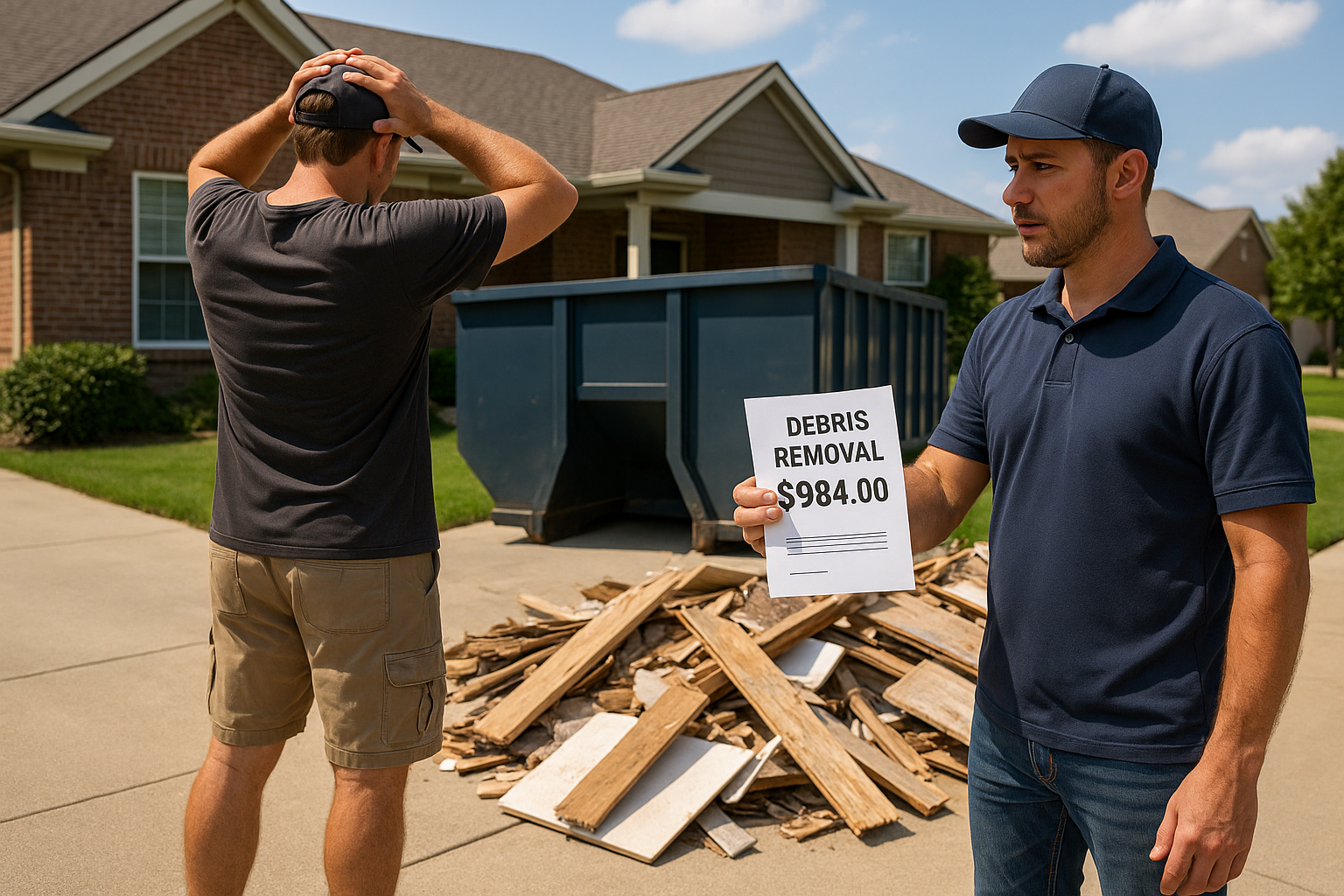
Demolition and Disposal
- Dumpster rental: $400–$800
- Labor and hauling: $1,000–$2,000
Change Orders
- Mid-project changes often cost $2,000–$5,000
- Labor delays and material reorders drive costs—not just the upgrade itself
Site Preparation
- Subfloor leveling, pipe relocation, panel updates
- Typical cost: $500–$2,000
- Rarely itemized in general bids
Cleanup and Waste Removal
- Often excluded from base contracts
- Final cleaning and hauling: $200–$1,000
Structural Repairs
- Rot, mold, framing issues discovered after walls open
- Typical cost: $2,000–$10,000
- Water damage is one of the most common surprises
Temporary Living Costs
- Takeout, rentals, pet boarding during downtime
- Typical cost: $1,500–$3,000
- Almost never budgeted
Material Price Fluctuations
- Mid-project price increases can add $1,000+
- Especially common with lumber, tile, and specialty finishes
Utility Upgrades
- New circuits, gas lines, or HVAC modifications
- Typical cost: $1,000–$3,000
How to Spot Hidden Costs Early
Most hidden costs are predictable—if you know where to look.
- Ask direct questions:
“Does this bid include permits, disposal, cleanup, and delivery?” - Require line-item bids:
Reject lump sums that hide exclusions. - Walk the site during demolition:
Exposed walls reveal wiring, plumbing, and water damage early. - Clarify scope precisely:
Avoid vague phrases like “kitchen remodel.” Specifics prevent scope creep.
How to Protect Your Remodeling Budget
These steps dramatically reduce surprise costs.
Limit change orders:
Cap changes at $1,000 or require written approval above $500
Add a 10–20% contingency:
$2,500–$5,000 on a $25,000 remodel
Use an all-inclusive contract:
Anything excluded becomes your expense
Track every dollar:
Spreadsheets or budgeting apps keep drift visible
Frequently Asked Questions
Hidden remodeling costs are expenses not included in the original bid, such as permits, demolition, disposal, structural repairs, change orders, and temporary living costs.
Most remodels exceed budget due to vague contracts, excluded scope items, mid-project changes, and unexpected conditions uncovered during demolition.
Homeowners should plan an additional 10–20% contingency to absorb unexpected expenses without derailing the project.
Avoid surprises by demanding detailed bids, clarifying scope, budgeting a contingency, limiting change orders, and tracking expenses throughout the project.
Conclusion: Plan for the Ghosts – and Write you contract terms to help keep them away.
Hidden remodeling costs are real, recurring, and avoidable—if you plan ahead. Permit fees, demolition surprises, structural fixes—they don’t announce themselves until it’s too late. But with a detailed bid, airtight contract, and a financial cushion, you can neutralize these threats early.
Your $25,000 remodel doesn’t have to spiral. Plan for the costs most homeowners forget—and finish on time, and on budget.