

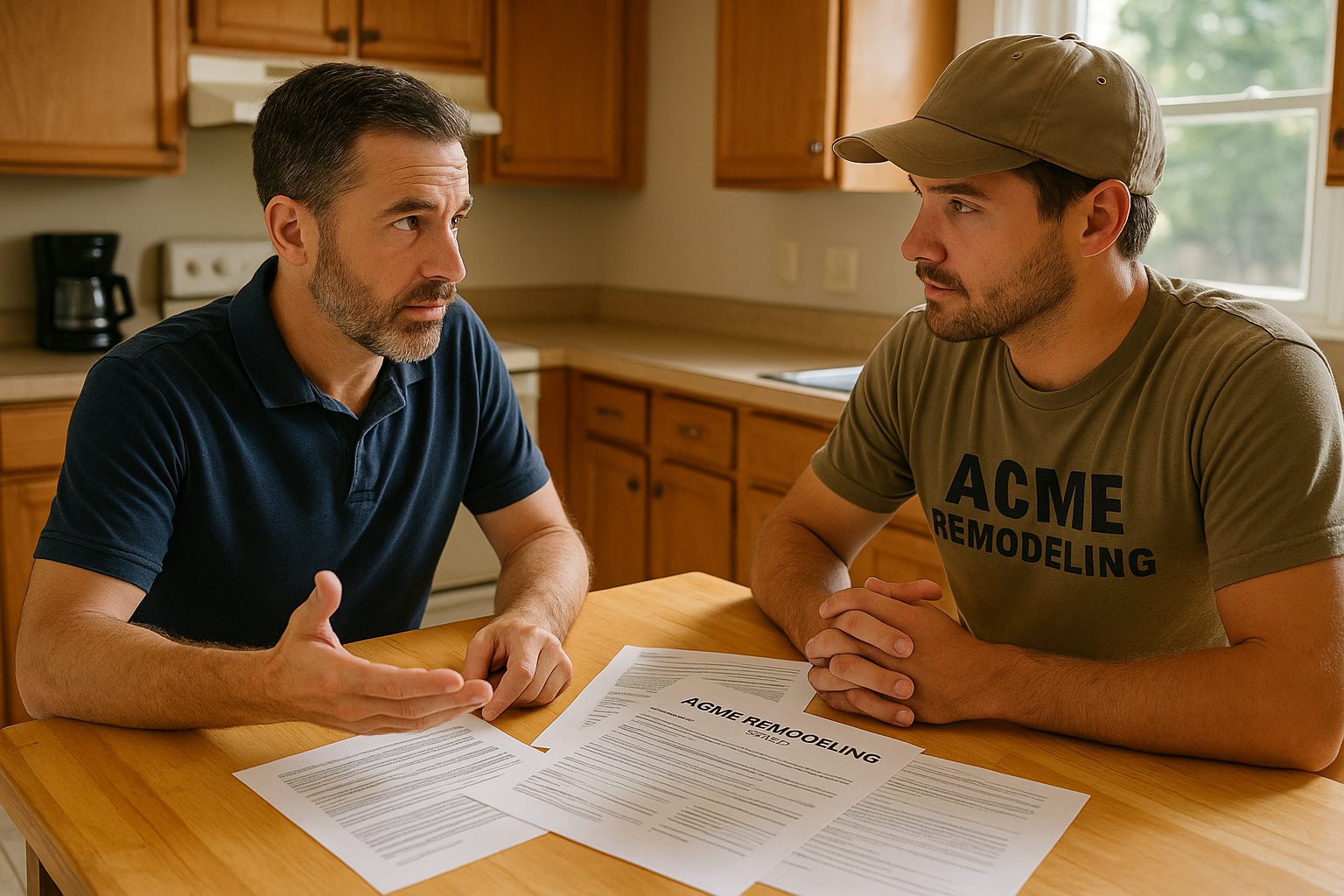
Takeaway: To negotiate a remodeling contract effectively, homeowners must control scope definition, total price, payment milestones, timelines, change orders, and warranties before signing. Most cost overruns occur because contracts leave these terms vague, shifting financial risk to the homeowner.
Legal & Practical Context
Negotiating a remodeling contract is not about confrontation — it is about risk control. A well-negotiated contract protects your money, enforces timelines, and prevents surprise costs. A poorly negotiated one can turn a $25,000 remodel into a $35,000 dispute.
Industry data shows:
- According to Houzz, 53% of remodeling projects exceed their original budget (Clear Real estate cites 78% of remodels blow past budgets by $5,000 or more.
- The most common cause is unclear or incomplete contract terms
Why Remodeling Contract Negotiation Matters
Most homeowners negotiate price — but price alone is not the risk.
The real risks come from contracts that:
- Fail to define scope precisely
- Allow flexible timelines
- Front-load payments
- Permit undocumented change orders
When these gaps exist, “reasonable adjustments” quietly become thousands in added cost.
A strong contract:
- Locks expectations in writing
- Controls when money is released
- Limits liability if problems arise
What Should Always Be Negotiated in a Remodeling Contract
Before signing, homeowners should negotiate these non-negotiable contract terms:
Scope of Work
Every task must be listed in detail.
“Full kitchen remodel” is not enforceable.
A proper scope includes demo, electrical, plumbing, finishes, and installation specifics.
Total Project Cost
The contract must reflect the all-in cost, including:
- Labor
- Materials
- Permits
- Overhead
If the bid says $25,000, confirm nothing is excluded.
Payment Schedule
- Limit deposits to 10%
- Tie payments to completed milestones
- Never release more than 90% before final punch list completion
Project Timeline
Include (at a minimum):
- Firm start date
- Firm completion date
- Intermediate milestones
Add a delay penalty (e.g., $50/day) to discourage open-ended schedules.
Change Orders
Every change must be:
- Written
- Priced
- Approved before work begins
Cap changes (e.g., no single change over $1,000 without written approval).
Warranties
Require a written warranty:
- Minimum one year for labor and materials
- Two years preferred
Negotiation Strategies That Actually Work
Once the contract terms are clear, negotiation becomes tactical — not emotional.
- Do not reveal your budget upfront
- Ask for labor and material breakdowns
- Look for padded or vague line items
- Use value engineering (good / better / best options)
- Stay collaborative, not combative
If terms cannot be negotiated reasonably, be prepared to walk.
Common Contractor Pushbacks (And How to Respond)
“That’s the best I can do.”
→ “Another licensed contractor quoted this lower. Can you explain the difference or adjust?”
“Permits aren’t included.”
→ “They need to be. Otherwise, I carry the liability.”
“It’ll take as long as it takes.”
→ “I need defined deadlines and consequences for delays.”
“I need 50% upfront.”
→ “I can do 10% down with milestone payments.”
Key Rules to Remember
- Never negotiate blindly — control the paper first
- Vague language always favors the contractor
- Milestone payments protect cash flow
- You are not difficult — you are responsible
Frequently Asked Questions
Homeowners negotiate successfully by defining scope precisely, limiting upfront payments, enforcing timelines, requiring written change orders, and tying payments to completed milestones.
Homeowners should never pay more than 10% upfront. Larger deposits significantly increase financial risk if delays or disputes occur.
Yes. Most remodeling bids include pricing flexibility. Negotiation often occurs by adjusting scope, materials, labor assumptions, and payment structure — not just headline price.
Vague contracts allow scope creep, surprise charges, delays, and weak legal enforcement. Most remodeling disputes stem from unclear contract language.
Bottom Line
Negotiating a remodeling contract is not optional — it is financial self-defense.
If you don’t control the contract, you carry the risk.
You hold the pen.
You hold the checkbook.
You hold the leverage.
Deeper Dive: More Proven Negotiating Tactics for under $25.00 in Rebo’s Remodeling Rules